Peak watts, continuous watts, and torque: reading motor specifications
This page contains no affiliate links. It exists because the arithmetic on it is needed to read the guides that do.
The wattage in a product title is chosen by a marketing department, not by an engineer. It is almost always the peak figure — the number the motor can hit for a few seconds before heat forces it back. The number that describes what the machine does all day is usually further down the page, and sometimes it is not there at all.
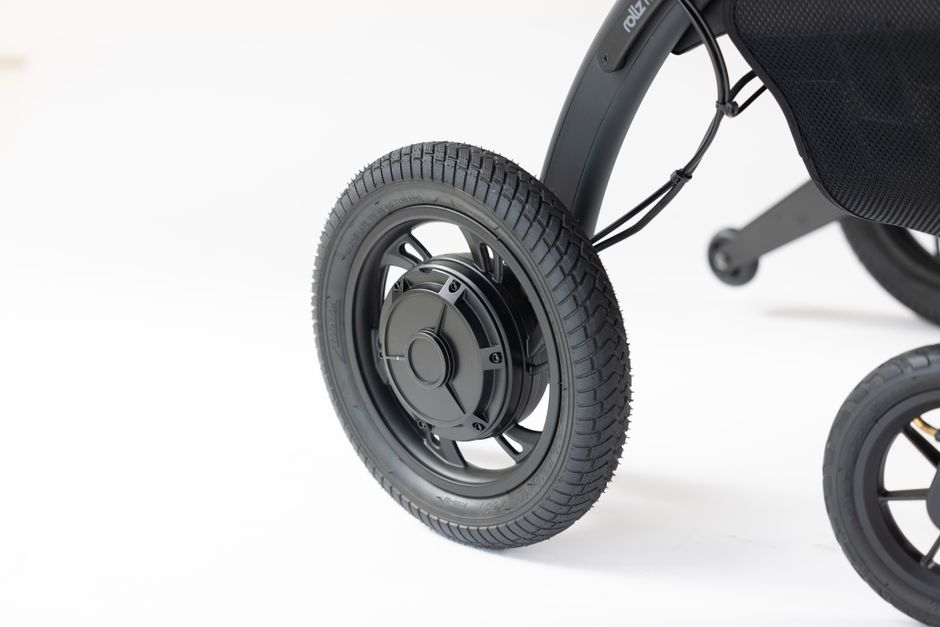
Two different watts
| Figure | What it measures | Where you see it |
|---|---|---|
| Continuous (also “nominal” or “rated”) | The power the motor can produce indefinitely without overheating | Specification table, sometimes omitted |
| Peak (also “max”) | The power it can produce for a short burst, typically seconds to a minute | Product title, hero image, advert |
A motor sold as “1000 W” is commonly a 500 W continuous motor with a 1000 W peak. That is not necessarily a bad motor — peak headroom is genuinely useful for pulling away and for short climbs — but comparing one bike's peak figure against another bike's continuous figure produces a conclusion with no meaning. Compare like with like, and if a listing gives only one number, assume it is the peak.
In the United States, the federal consumer-product definition of a low-speed electric bicycle (15 U.S.C. §2085) turns on a motor of under 750 W and a top motor-only speed of 20 mph on level ground with a 170 lb rider. That is a product-safety definition and it is measured on the continuous rating. It is not the same thing as your state's road rules, which use the three-class system. Check both.
The controller sets the real ceiling
Neither wattage figure is a property of the motor alone. The electrical power available to it is capped by the battery voltage and the maximum current the controller will pass:
battery volts  ×  controller max amps  =  peak electrical power

48 V × 25 A = 1,200 W
52 V × 30 A = 1,560 W
36 V × 15 A =   540 W
This is why a “1500 W motor” on a 48 V pack with a 20 A controller will never see 1500 W: the controller stops at 960 W. The motor rating is the size of the container. The controller decides how much you are allowed to pour in.
Controller amperage is one of the most reliably omitted specifications in this category. When you find it published, the seller has told you something real about the machine.
Torque is what you feel
Power and torque are related but not interchangeable:
power = torque × rotational speed
At a standstill, rotational speed is zero, so power is zero — and yet the machine still has to move you. What moves you is torque, quoted in newton-metres (Nm). Torque is the figure that determines whether a bike pulls away from a stop on a hill with a rider and a bag of groceries, and it is why a 250 W mid-drive motor can out-climb a 750 W hub motor.
The mid-drive drives the crank, so its output passes through the bike's gears and gets multiplied in low gear exactly the way your legs do. A hub motor drives the wheel directly and gets no gear multiplication at all: at low speed on a steep grade it is working at its worst operating point, drawing heavy current and turning most of it into heat.
| Hub motor | Mid-drive motor | |
|---|---|---|
| Where it drives | The wheel, directly | The crank, through the gears |
| Hill climbing | Weaker for a given rating | Stronger for a given rating |
| Efficiency under load | Falls at low speed | Held up by gear selection |
| Drivetrain wear | Low — the chain carries only your legs | Higher — the chain carries motor torque too |
| Cost and repair | Cheaper, simpler, widely serviceable | More expensive, often proprietary |
| Typical torque | 40–80 Nm | 60–95 Nm, delivered through gearing |
Reading the specification table
- Continuous rating stated separately from peak, with both labelled
- Torque in Nm — and if only one drivetrain figure is published, this is the more useful one
- Controller maximum amperage, from which you can compute the real power ceiling
- Motor type stated as hub or mid-drive, not just as a wattage
- For hub motors, geared or direct-drive: geared hubs give more low-speed torque for their size, direct-drive hubs are quieter and support regenerative braking
- Whether the quoted speed is a motor-only figure or a pedalling figure
What an omission tells you
A listing that publishes a peak wattage, no continuous rating, no controller amperage, and no torque figure has published one number, and it is the one that flatters the product most. That does not make the machine bad. It does mean the specification table is advertising rather than disclosure, and every comparison you make against it is a comparison against a marketing choice.
Related: watt-hours, not miles covers the energy side of the same drivetrain — and the reason a bigger motor number costs you range.